Showing posts with label Praying. Show all posts

Friday, October 16, 2020

Plan for Prayer

By John Piper

“If you abide in me, and my words abide in you, ask whatever you wish, and it will be done for you. By this my Father is glorified, that you bear much fruit and so prove to be my disciples. . . . These things I have spoken to you, that my joy may be in you, and that your joy may be full.” (John 15:7–8, 11)

Prayer pursues joy in fruitful fellowship with Jesus, knowing that God is glorified when we bear fruit in answer to prayer. Why do God’s children so often fail to have consistent habits of happy, fruitful prayer?

Unless I’m badly mistaken, one of the reasons is not so much that we don’t want to, but that we don’t plan to.

If you want to take a four-week vacation, you don’t just get up one summer morning and say, “Hey, let’s go today!” You won’t have anything ready. You won’t know where to go. Nothing has been planned.

But that is how many of us treat prayer. We get up day after day and realize that significant times of prayer should be a part of our life, but nothing is ready.

We don’t know where to go. Nothing has been planned. No time. No place. No procedure. And we all know that the opposite of planning is not a wonderful flow of deep, spontaneous experiences in prayer. The opposite of planning is the same old rut.

If you don’t plan a vacation, you will probably stay at home and watch TV. The natural, unplanned flow of spiritual life sinks to the lowest ebb of vitality. There is a race to be run and a fight to be fought. If you want renewal in your life of prayer, you must plan to see it.

Therefore, my simple exhortation is this: Let us take time this very day to rethink our priorities and how prayer fits in. Make some new resolve. Try some new venture with God. Set a time. Set a place. Choose a portion of Scripture to guide you.

Don’t be tyrannized by the press of busy days. We all need mid-course corrections. Make this a day of turning to prayer — for the glory of God and for the fullness of your joy.

Supplementary: https://youtu.be/N9I7mmpOaPU


Friday, August 23, 2013

Prayer: Advancing God's Program (Final Installment)

            The year has been a year of great awakenings and a journey into the depths of sweet fellowship with the Lord Jehovah. God is good. We are finally concluding an in-depth (but not conclusive) study on the prayerful attributes of worship. The significance of worship and prayer comes down to close communion and fellowship with the Lord as Master, Friend, Priest, Prophet, and King. The King's perfect program is on track to being completed, and I'm on board with it. Well, there are really only two options to choose from and I like the one with the prevailing outcome.

            The closing phrase of Luke 2 is "Your Kingdom come."It is a prayer for the advancement of God's kingdom, which is antithetical to our prayers we typically pray in advancement of our own program. As we strive to build our own empires or pad our own pockets we send up such selfish prayers that are not about God's will being done. But this is prayer should be the filter by which all our prayers are run through. The more we get to know God, the more we come to know His will (Rom 12). The more we realize His will, the more we want His will to be done, and the more our prayers are in harmony with His goals and principles.

            "The Kingdom, of course, is the sphere where Christ rules - the realm where He is Lord." To pray "Your Kingdom come" with sincerity is to submit one's desires and to yield one's heart without reservation to the Lordship of Christ. When I affirm the program of Jesus Christ's Kingdom I am setting aside my own fleshly, materialistic, or selfish requests since I have come to realize that my life is not about the earth, but the kingdom. Romans 14:17 sets the priority straight: "The Kingdom is not eating and drinking, but righteousness and peace and joy in the Holy Spirit."

            I'm not saying that we are despicable for praying for needs and desires. There is nothing wrong with praying to God for things we desire - as long as the desires of our hearts are holy. As time goes on it should be evident that our desires are aligned with the will of God. What I find awesome, and happens often, is how such prayers are always answered. Remember, Jesus said, "If you abide in Me, and My words abide in you, ask whatever you wish, and it will be done for you" (John 15:7). Furthermore, Jesus says, "If you ask the Father for anything in My name, He will give it to you" (John 16:23). "This is the confidence which we have before Him, that, if we ask anything according to His will, He hears us" (1John 5:14). There are qualifiers and we must pay attention to them - "If"; "In My name"; "According to His will." Any prayer that follows a different pattern is not an act of true worship, and therefore it not a legitimate prayer.

            Worship: True prayer is worship. We go to a loving Father in intimate relationship, accepting that He knows best. Our prayers are reflections of an obedient heart, expressing passion for His glory. Let us press forward for His glory.

Source: Pulpit Magazine, Premier Issue. Oct 2012. Vol. 1 No. 1. Ipad version.

Tuesday, June 18, 2013

Prayer Priority (Part 4)


“Not to us, O LORD, not to us, but to Your name give glory…” – Psalm 115:1

            This post is the second to final devotional installment on prayer. I can never get deep enough into prayer, especially as I get older and more tired. And the more I ponder and commune with the Lord, prayer becomes joyfully serious fellowship, worship, and relationship. I cannot separate prayer with God from fellowship with God. Pondering afresh on the prayer Jesus taught as Luke records it, Jesus entire opening sentences of the prayer is a straight-forward exclamation of worship: “Father, hallowed be Your name” (Luke 11:2). That is, it is an expression of praise, and it reflects God’s own priority: “I am the LORD, that is My name, I will not give My glory to another” Isaiah 42:8. Jesus established the truth that prayer is worship by beginning His model prayer that way.

            To worship God is to “Sing the glory of His name” (Psalm 66:2). “Ascribe to the LORD the glory due His name” (1Chronicles 16:29; Psalms 29:2; 96:8). “Not to us, O LORD, not to us, but to Your name give glory” (Psalm 115:1). Such expressions capture the true spirit of a worshiping heart.

            What this first sentence does to any petition, as we have discussed in Part 2 and 3, is it qualifies every other petition in the prayer. It rules out asking for things “with wrong motives, so that you may spend it on your pleasures” (James 4:3). It eliminates every petition that is not in accord with the perfect will of God. In the words of Arthur Pink:

“How clearly, then is the fundamental duty in prayer here set forth: self and all its needs must be given a secondary place and the Lord freely accorded the preeminence in our thoughts, desires and supplications. This petition must take the precedence, for the glory of God’s great name is the ultimate end of all things; every other request must not only be subordinated to this one, but be in harmony with and in pursuance of it. We cannot pray aright unless the honor of God be dominant in our hearts. If we cherish a desire for the honoring of God’s name we must not ask for anything which it would be against the Divine holiness to bestow.”

            As we dig deeper into the expression, “Hallowed be Your name,” let us consider for a devotional moment, “What does that expression mean?” We still use the expression “my name” in that sense at times. If we say someone has ruined their good name, we mean that person has disgraced himself or herself, and thus spoiled their reputation. They have diminished others’ perception of who they are. And if I give you power of attorney, I have authorized you to act “in my name.” You thereby become my legal proxy, and any legal covenants you enter into are as binding on me as if I signed them myself.
            
            That is precisely what Jesus meant when He taught us to pray in His name: “Whatever you ask in My name, that will I do, so that the Father may be glorified in the Son. If you ask anything in My name, I will do it” (John 14:13-14). He was delegating His authority to us to act as if we were His emissaries when we let our requests be made to known to God.

            This is a built-in safeguard against the misuse of His name for our own self-aggrandizing purposes. Note in John 14:15, that immediately after Jesus delegated His authority of His name to His disciples, He said, “If you love Me, you will keep My commandments” (v. 15). He then restates the principle with all the necessary qualifications just one chapter later in John 16:7: “If you abide in Me, and My words abide in you, ask whatever you wish, and it will be done for you” (emphasis added). Therefore I must be careful to not be so flippant with God’s name, throwing it around wistfully, cheaply and an over-familiarity. He is our loving Father, yes, but I also remember that His name is holy. The fatherhood of God in no way diminishes His glory, and I believe that when we find ourselves thinking that way, we think and believe correctly: “Father, hallowed be Your name.”

            By teaching us to begin all our prayers with a concern for the name of God to be hallowed, He was teaching us to pray for God’s will over and above our own. Antagonistic to the prosperity gospel, were not created to enjoy prosperity in a fallen world. We were created to glorify God and enjoy Him forever. We ought to be more concerned for the glory of god than we are for our own prosperity, our own comfort, our own agenda, or any other self-centered desire. I believe, based on this examination, that’s why Jesus taught us to think of prayer as an act of worship rather than merely a way to ask God for things we want.

Source: Pulpit Magazine, Premier Issue. Oct 2012. Vol. 1 No. 1. Ipad version.

Tuesday, April 23, 2013

Proper Prayerful Worship: A Desire to See God's Will Fulfilled (Part 3)


“I pray that the eyes of your heat may be enlightened, so that you will know what is the hope of his calling, what are the riches of the glory of His inheritance in the saints, and what is the surpassing greatness of His power toward us who believe.” – Ephesians 1:18-19 (Context)

We have been focusing on prayer as a purposeful focus on God: His will; His grace; His plans; and His forgiveness. As a Christian, I must be biblically informed in order that my prayers are in “harmony with the will of God” (JM). I want God's will because God's will and counsel is good, wise, and perfect according Him – but don’t miss that God’s countenance is perfect for us, always . This kind of conscious, Spirit enlightened expression communicates "our praise, our unworthiness, our desire to see God's will fulfilled, and our utter dependence on Him for all our needs" (ibid). Thus, our prayer is worshipful.
In his book, “Knowing God,” J.I. Packer poses that the problem of knowing God is that most people, even Christians, do not think highly of – or fear – God. Do you think highly of God (Isaiah 5,6)? The God-ward focus of Jesus’ model prayer is impossible to miss with His opening lines establishing the focal point of non-repetitive, intimate, worshipful prayer. Jesus starts the prayer praising God’s name, expressing active willingness for His Kingdom to come and His will to be done (Matthew 6:7-14).  The supplicant is concerned for the honor of God and the extension of His Kingdom. Everything else fits into that context, so that the whole agenda of prayer is determined by the Kingdom and glory of God. This is perhaps the most important perspective to keep in mind in all our praying.

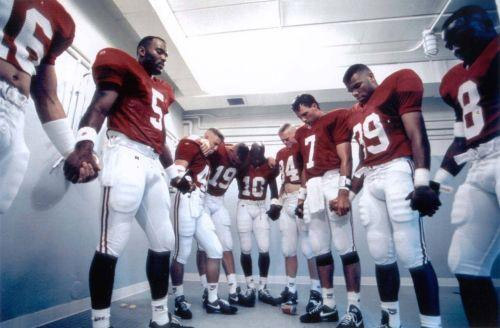
Alabama Christian Athletes Praying
            Far from being merely a wish list, godly prayer is fundamentally an act of acknowledging God’s sovereignty, confessing our own total reliance on His grace and power, and looking to him as Lord and Provider and Ruler of the universe. God is not some celestial Santa. Any prayers that are self consuming, self indulgent, self aggrandizing; any prayer that seek whatever I want no mater what God wants; any prayer that suggest God must deliver because I have demanded it – those are prayers that take his name in vain. Such praying is egregious sin against the nature of God, against the will of God, and against the Word of God. Because such prayer is an act of worship, to offer a prayer based on such a heinous perversion of God’s character is tantamount to worshiping a false god.

Source: Pulpit Magazine, Premier Issue. Oct 2012. Vol. 1 No. 1. Ipad version.

Saturday, April 13, 2013

The Power of Worshipful Prayer (Part 2)

By John MacArthur


When we properly make our requests known to God – without anxiety,
through prayer and supplication, and with thanksgiving (Philippians 4:6)
 – we are acknowledging His sovereignty, confessing our own total reliance
on His grace and power, and looking to Him as Lord and Provider
and Ruler of the universe – not as some kind of celestial Santa.
Leading into this next installment on prayer, we are becoming more intimately acquainted with the power and succinctness of prayer through the examinations of John MacArthur. He describes the joy of praying as "the distilled essence of worship." The problem of the misunderstanding of prayer is examined in the first article adopted from Pulpit Magazine's first issue. Particularly examined is how many Christians view prayer as nothing more than "a kind of utilitarian wish list." Unfortunately many stop there and miss out on the unmistakable "parallelism between prayer and worship (5)." This is no coincidence.  Diving deeper we examine how to have closer and lasting fellowship with the Lord God, Jesus, and The Holy Spirit through praying.

There are several problems with the perspective of prayer as exclusively asking. Prayer is more than merely asking. First, Jesus' model prayer is more than merely "asking." Don't misunderstand, prayer does include asking: there are petitions for daily bread (the bare necessities) and forgiveness (the most urgent of spiritual needs). But the model prayer Jesus gave His disciples also includes at least four of the five elements. There are many who want to eliminate from their definition of prayer: praise, adoration, humiliation, and confession.

Remove praise and penitence form the Lord's Prayer and you have gutted it. Insist that proper prayer "is not anything else but asking," and you overthrow one of the central lessons we learn from Jesus' example, that prayer is first and foremost an act of worship. Even worse, such teaching sets up a kind of role reversal between the one praying and the God to whom they pray.

Contrary to what the Bible teaches about our role and bondservant-relationship with the Lord, so-called “Name-it-and-claim-it” theology teaches that man is sovereign and God is his servant. The person praying thinks they are in the demand-and-command position, with God in the role of the servant who is obligated to cough up whatever we ask for. This sort of thinking has more to do with pagan cargo cults than with biblical Christianity.

Prayer is much more than merely asking and receiving. It is indeed a great privilege to come boldly before the throne of grace and to let our requests be made known to God (Hebrew 4:16; Philippians 4:6).  Scripture repeatedly promises that if we ask for anything in faith, God will answer – meaning if we ask in accord with God’s will as prompted by His Spirit (which we shall commune with actively in daily dialogue), He will always graciously and generously respond, not necessarily give (Matthew 7:7-11; 17:20; 21:22; Mark 11:24; James 1:6; 1John 3:22). He often grants our requests “far more abundantly beyond all that we ask or think, according to the power that works within us (Ephesians 3:20, NASB).


Godly prayer is fundamentally an act of worship.
But the nature of a genuine, faithful prayer is clearly spelled out in 1John 5:14: “This is the confidence which we have before Him, that, if we ask anything according to His will, He hears us.” In other words, the promise of answered prayer is not an unqualified blank check. The promise is made only to faithful, obedient, sober-minded, biblically informed Christians whose prayers are in harmony with the will of God. It’s not a guarantee of cargo to every gullible or superstitious religious enthusiast who uses Jesus’ name as an abracadabra. Jesus said, “If you abide in Me, and My words abide in you, ask whatever you wish, and it will be done for you” (John 15:7, emphasis added). The essential element in prayer is tied to Jesus assertion here. Godly prayer is fundamentally an act of worship. It is an expression of our praise, our unworthiness, our desire to see God’s will fulfilled, and our utter dependence on Him for all our needs. Thus every aspect of prayer is an act of worship.

When we properly make our requests known to God – without anxiety, through prayer and supplication, and with thanksgiving (Philippians 4:6) – we are acknowledging His sovereignty, confessing our own total reliance on His grace and power, and looking to Him as Lord and Provider and Ruler of the universe – not as some kind of celestial Santa. Proper prayer is pure worship, even when we are making requests.

Source: Pulpit Magazine, Premier Issue. Oct 2012. Vol. 1 No. 1. Ipad version.


Wednesday, January 16, 2013

Prayer As Worship (Part 1)

By John MacArthur 


    Jesus' long prayers were the ones He prayed in private. 
      His public prayers were perfect examples of  crisp, forth-
      right plain-speaking.

Study the exemplary prayer in Scripture and you cannot help but noticing that all of them are brief and simple.  Prayer that is heartfelt, urgent, and unfeigned must be of that style.  Verbiage and windbaggery are badges of insincerity, especially in prayer.  The prayer of the publican in Luke 18:13 is as short and to the point as possible:  "God, be merciful to me, a sinner!"  Then there's the prayer of the thief on the cross: "Jesus, remember me when you come in Your Kingdom!" (Luke 23:42). Those prayers are cut from the same cloth as Peter's cry foro help when he was walking on water - sometimes cited as the shortest prayer in the Bible: "Lord, save me" (Matthew 14:30).

Scripture records very few long prayers.  Much of Psalm 119 is addressed to God in the language of prayer, and of course, that is the Bibles longest chapter.  Other than that, Nehemiah 9:5-38 contains the longest prayer in all of Scripture, and it can be read aloud with expression in less than seven minutes.  John 17 is the New Testament's longest prayer.  It's also the longest of Jesus' recorded prayers, just twenty-six verses long.

Now of course Jesus prayed much longer prayers because Scripture records several instances where He prayed in solitude for extended periods of time (Matthew 14:23; Mark 6:46). When it suited Him, He would even spend the entire night in prayer (Luke 6:12).  It was His habit thus to pray, both privately and with His disciples (John 18:2).  And the pattern was clear: His long prayers were the ones He prayed in private.  His public prayers were perfect examples of crisp, forthright plain-speaking.  

Listening to Jesus pray and observing His constant dependence on private prayer gave the disciples an appetite for prayer.  So they asked Him, "Lord, teach us to pray" (Luke 11:1).  He responded by repeating the very same model of prayer He gave in the sermon on the Mount.  We call it "The Lord's Prayer." We ought rather to think of it as "The Disciples Prayer," because its centerpiece is a petition for divine forgiveness, something Jesus would never need to pray for.  Like all great praying it is both succinct and unpretentious.  There is not a wasted word, not a hint of vain repetition, and not a single note of ostentation or ceremony in the whole prayer.

And He said to them, "When you pray, say: 'Father, hallowed be Your name.  Your kingdom come.  Give us each day our daily bread.  And forgive us our sins, for we ourselves also forgive everyone who is indebted to us.  And lead us not into temptation'" (Luke 11:2-4).  That prayer was a pattern for the disciples to follow, not a mantra to be recited without engaging the mind or passions.  The various elements of Jesus' prayer are all reminders of what our praying ought to include:  praise, petition, penitence, and a plea for grace in our sanctification.  Those are not only the key elements of prayer, they are also some of the principal features of authentic worship.  The parallelism between prayer and worship is no coincidence.  Prayer is the distilled essence of worship.

That perspective is often lost in this era of self-focused, subjective, felt-needs-oriented religion.  Multitudes think of prayer as nothing more than a way to get whatever they want from God.  Prayer is reduced to a superstitious means of gain - and some will tell you that God is obligated to deliver the goods.  Religious television is full of charlatans who insist that God must grant whatever you ask for if you can muster enough "faith' and refuse to entertain any "doubt."  Faith in their lexicon is a kind of "positive confession." Doubt, as they might describe it, is any rational or biblical qualm about whether the thing you desire is in accord with the will of God.  Those, of course, are not biblical definition of faith and doubt.  Nor can anyone's prayer legitimately be called a "prayer offered in faith" (James 5:15) if it is contrary to the will of God.

Charismatics are not the only ones who see prayer as nothing more than a kind of utilitarian wish list.  Plenty of mainstream evangelicals and old-style fundamentalists seem confused about the purpose of prayer, too.  John R. Rice, an influential fundamentalist pastor, wrote a bestselling book in 1942 titled Prayer-Asking and Receiving.  He wrote, "Prayer is not praise, adoration, meditation, humiliation nor confession, but asking...Praise is not prayer, and prayer is not praise.  Prayer is asking...Adoration is not prayer, and prayer is not adoration.  Prayer is always asking.  It is not anything else but asking.

STAY TUNED FOR PART 2

Friday, January 15, 2010

How to Pray Big for Your Child


Mariah approached the beginning of middle school as a happy, normal sixth grader. She was a good student, she would be attending her neighborhood school with her best girlfriends, and she was excited about the new adventure. But that all changed on the first day of school. Mariah basically experienced the equivalent of a panic attack. She started crying uncontrollably and inconsolably. Tragically, the scene was repeated almost every day of that school year. Her mother would drive her to school but was often unable to get Mariah out of the car. Other days, Mariah would make a brave attempt to face her school fears, only to spend most of the day in the counselor’s office or crying at her desk. Her new adventure had turned into a nightmare.

During that time, Mariah’s parents did everything they could to help her. They prayed for her and with her. She started seeing a professional Christian counselor, and her school counselor worked with her every day. She also started taking antidepressants.

The next year, as Mariah was about to enter seventh grade, she and her parents agreed that she would try a new school. It was a Christian school with a great reputation. Things started off smoothly enough for Mariah, but within just a few weeks, the panic attacks were back.

Mariah bottomed out in the late fall of her seventh grade year. Her mother, Kathleen, wrote, “It was the most gut-wrenching thing I’ve ever experienced, watching my child just try to slog through such misery. She was crying out to God. She was begging me for help. ... It’s so hard to convey how severe this was. I’m not talking about a bratty kid crying and refusing to get out of the car. I’m talking about true hysterics, rocking, making guttural sounds, etc.”

Things were so bad that Kathleen and her husband drove Mariah to a local psychiatric hospital. They basically told Mariah that if she couldn’t gain control of her fears, they would have to hospitalize her. It wasn’t a threat; these Christian parents really didn’t know how to help their daughter. The drugs, therapy, and prayers didn’t seem to be working.

Mariah reluctantly agreed to give school another try. Kathleen remembers dropping her off and watching her frightened but determined seventh grader weeping as she disappeared through the school’s doors. Kathleen wrote, “I got in my car and started sobbing, and then I prayed for her like I had done every other day. I was praying things like, ‘O God, please help Mariah. Please, please, please. God, I know you hear her crying out to you. Why won’t you help her? Please just help her put one foot in front of the other and make it through the day.’”

And then it happened. Kathleen had a breakthrough. As she sat in her car, praying for God to help Mariah survive the day, she clearly heard God say, “Is that really all you want from me?”

That’s a really good question, isn’t it? How many times have you gone to God in a moment of parental desperation and pleaded for mere survival? How often are we as Christian parents guilty of not asking for God’s best provision but simply his bare minimum? How quickly do we forget while in our foxhole praying that Jesus promised abundant life to his children? Have you ever heard the Holy Spirit say, “Is that really what you want from me?” in response to your prayers?

Kathleen felt the gentle rebuke in the Spirit’s question and decided to go for broke. She wrote, “So I just unleashed. I said, ‘No, that’s not all I want! I want Mariah to be great, not good! I want Mariah to be blessed! I want everyone who knows her to know that your hand is on her. I want everyone who meets my child to know that God has blessed her.’”

And that’s exactly what God did. Mariah didn’t just survive that day, she actually enjoyed it. She was great, not just good. And she’s been great just about every day since. Today Mariah is a happy teenager who is excelling in school. She has friends, dances on the drill team, makes good grades, and serves in her church. And she’s completely off the antidepressants. Mariah is prevailing, not just surviving, because her mother obeyed the leading of God’s Spirit and dared to ask for something big from God.

Pinpoint praying versus no-point praying:

How many times have you settled for the “Lord, just help my child to survive” kind of praying that Kathleen wrote about in the last chapter? How often have you mumbled some weak, pathetic prayer in hopes that God would help you or your child just to get by? Have you ever thought about that? Have you ever thought about how ridiculously low we set the bar when it comes to praying for our kids? One would think that we were dealing with the little man behind the curtain who pretends to be the great wizard of Oz, instead of with the holy and creating God of the universe. Why do we frequently ask so little of God when it comes to our kids?

Perhaps you’ve prayed one of the following prayers:

- God, please keep Sally from getting pregnant.
- God, please help Jake to pass math.
- God, please help Timmy not to wet his pants today.
- God, help me and Joe not to argue today about his chores.

While there’s nothing really wrong with this type of praying, it doesn’t ask or require much of God. Do you hear the “Lord, just help us to get by” mind-set of those prayers? It’s as if the parent is approaching a God who is irritated and worn-out by the parent’s constant pestering—as if God might react as we parents do when we’re tired and irritable. But God is not an irritable parent. He never grows weary of our requests to him. And while there is nothing wrong with praying for little things, we should not settle for small answers when God has promised that all of his power is available to us when we ask. And when it comes to our kids — really, they’re his kids — we shouldn’t skimp. We need to pray with focus and not toss up weak and wimpy petitions to our holy God.

I’m talking about the difference between what I call pinpoint praying and no-point praying. We can’t afford to waste our time by praying no-point prayers for our kids. No-point prayers resemble the “God be with Bill” kind of praying that doesn’t ask anything of God. More specifically, no-point praying is:

1. Too broad­ — No-point praying asks God to cure world hunger or save all the people on earth. Broad prayers sound good on the surface but rarely have any real courage or passion behind them.
2. Too vague — This is the essence of the “God bless Joe” kinds of prayers. They’re fuzzy and have no real meaning. They don’t really ask anything tangible of God.
3. Too safe — No-point prayers don’t require any faith. There’s no risk at all in praying them, because nothing that requires God to act is ever asked of him.

No-point prayers are completely inadequate when it comes to our children. They’re too broad, vague, and faithless to be offered as real prayers for our kids. You and I know our children deserve better. God also commanded us to pray better than that. What he expects of us is pinpoint praying.

Pinpoint prayers, as opposed to no-point prayers, have clear purpose, direction, and focus. They’re the kind of prayers that honor God the most, and they’re the kind that you and I want to be praying for our children. Pinpoint prayers are:

1. Biblical — Pinpoint prayers are deeply rooted in God’s Word. They have authority because they flow right out of what God has already told us he is willing to do. There’s no guesswork in pinpoint praying. As a parent, you just take the world’s greatest prayer script (the Bible) and use it as your guide for what and how you pray for your kids.
2. Specific — There’s nothing vague about pinpoint prayers. They’re typically short, direct, and to the point. Consider Jesus’s petitions in the Lord’s Prayer. His requests for God’s name to be glorified and for God’s provision, protection, and forgiveness are all very specific and focused. There’s nothing broad or uncertain about them. Pinpoint praying requires you to think through what you want God to do, build the case for it biblically, and then say it in the most precise and deliberate way possible to God. No flowery language, no King James English, and no long or theologically loaded phrases are required with pinpoint prayers. Part of their power lies in their directness.
3. Bold—Pinpoint prayers don’t mess around. They don’t dance around an issue, hoping that God will get the hint and come through with a miracle without us really having to ask for one. Pinpoint prayers walk right up to God’s throne and plead for his best, for his kingdom, and for his favor in our lives and the lives of our children. This is not weak-willed praying. Can you think of any area where boldness, courage, and faith are more appropriate than in prayers for your kids?

Prayer is the most significant form of communication that humans, specifically parents, can engage in. When a Christian talks to God, all the power of heaven is at play, and cultures, nations, and history lay in the balance. For parents, talking to our kids is critical; talking to God about them is even more so. Ask God to equip you to believe and expect big things of him in prayer. Ask God to show you how to pray big, hairy, audacious prayers for your child.

Adapted excerpt from Pray Big for Your Child by Will Davis, Jr. © 2009

Revell, a division of Baker Publishing Group. Used by Permission. All rights to this material are reserved. Material is not to be reproduced, scanned, copied, or distributed in any printed or electronic form without written permission from Baker Publishing Group.

Will Davis, Jr., is the founding and senior pastor of Austin Christian Fellowship, a nondenominational church in Austin, Texas. He is the author of Pray Big, Pray Big for Your Marriage, and Why Faith Makes Sense.

Friday, November 20, 2009

Praying in Jesus' Name

John 14:13,14
“Whatever you ask in My name, that will I do, so that the Father may be glorified in the Son. If you ask Me anything in My name, I will do it.”

To ask in Jesus’ name does not mean to tack such an expression on the end of a prayer as a mere formula. It means:


1. The believer’s prayer should be for Christ’s purpose.
2. The believer’s prayers should be on the merit of Christ and not any personal merit of worthiness.
3. The believer’s prayer should be in pursuit of Christ’s glory alone.

Pray without ceasing and petition in faith and without doubting.

Labels